12.01.10
FOUR





karja
hansen
hansen


adam
fitzgerald
fitzgerald

<< Meet adam >>
11.30.2010
THE ECONOMY OF HELEN
THE ECONOMY OF HELEN

We were born without anthems. Where our forebears converged in arenas, waving white flags, we listened passively.
One month before my fifth birthday, my historian mother forced me to watch CNN as Berlin's citizens destroyed a wall. Not all my peers had such a prescient tutor, but the moment molded our collective memory. As adolescents, we witnessed the collapse of Cold War systems in society and politics. But as war fermented, and a recession festered, we abandoned our duty to history. From a failing hegemony came contested campaigns, moral panic and auto-tune on the airwaves. It was a time of dangerous lullaby.
One month before my fifth birthday, my historian mother forced me to watch CNN as Berlin's citizens destroyed a wall. Not all my peers had such a prescient tutor, but the moment molded our collective memory. As adolescents, we witnessed the collapse of Cold War systems in society and politics. But as war fermented, and a recession festered, we abandoned our duty to history. From a failing hegemony came contested campaigns, moral panic and auto-tune on the airwaves. It was a time of dangerous lullaby.
Then, we connected. Online, we watched together as secret information begat public access. Fortnight Journal documents 14 nascent minds formed in the moment when free information burst open ancient constraints of lucky birth.
Like an anthem, this journal is structured on call and response. Fortnight looks to reconcile precedent and pedagogy to the outspoken tendency of the internet cohort. Each Quarter One contributor seeks humble initiation. Emerging talents—from artisans, to polymaths—they work in common pursuit of rigor and authenticity.
In a post-career world, they have instead elected vocations. Though variant in genre, origin and persuasion, each of our 14 ask to parse lasting value from passing trend. Uniquely, we are a collaborative bunch, but Fortnight is our formal overture for guidance. We are thus blessed that writer, performer and artist Patti Smith serves in this issue as our first luminary mentor.
An "anthem of a generation" too often implies burning self-concern; let us now reclaim a genre intended for tribute.
Yours,
Samantha Hinds
THE ECONOMY OF HELEN
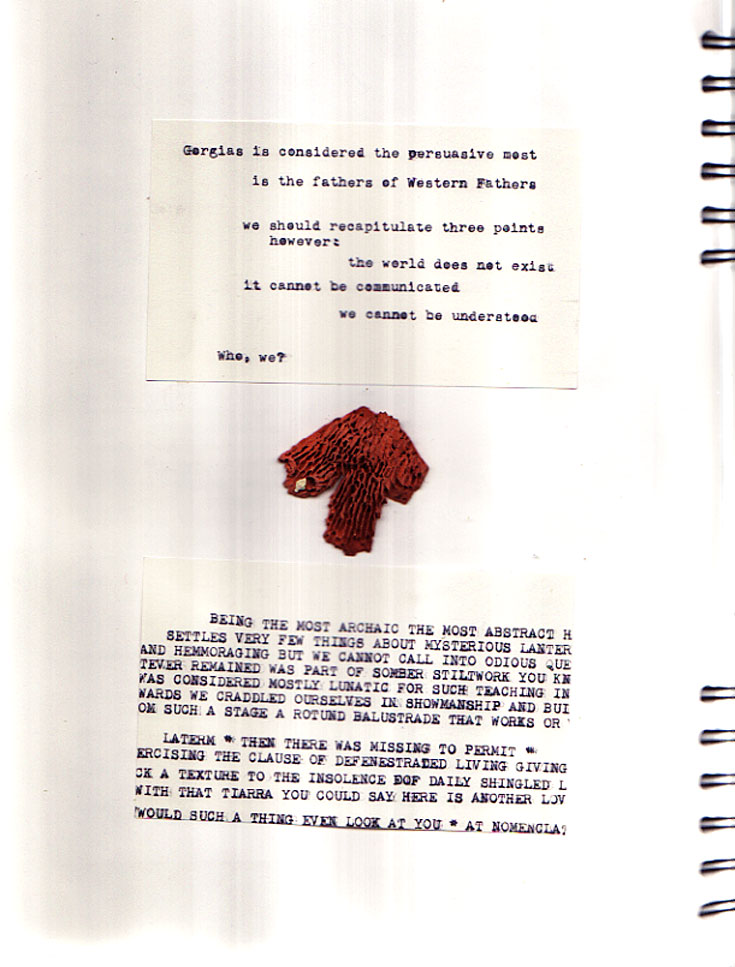
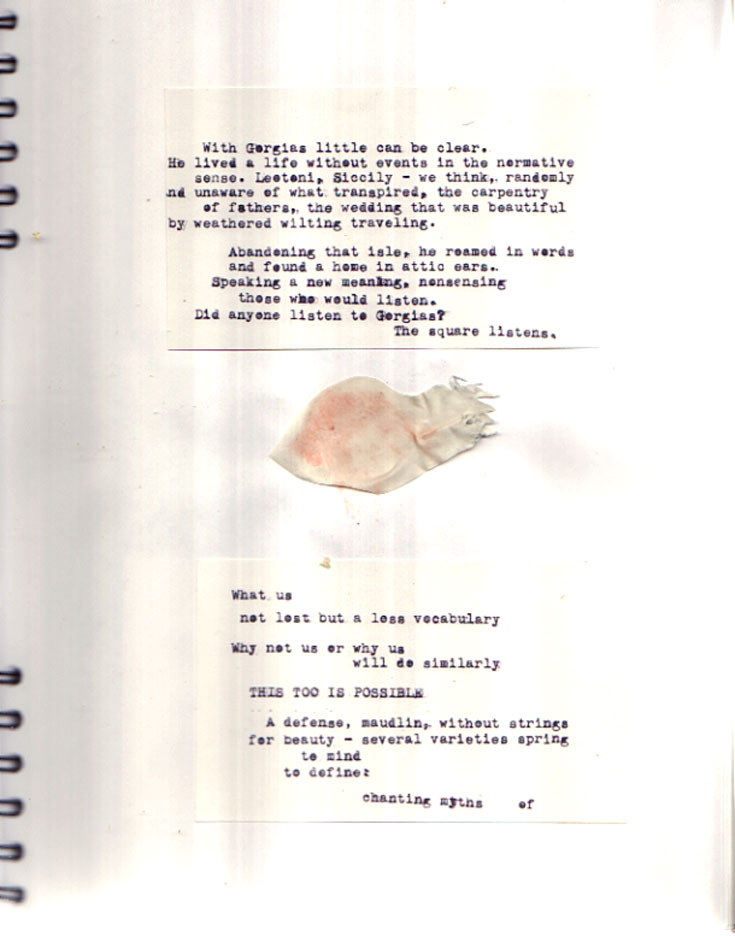
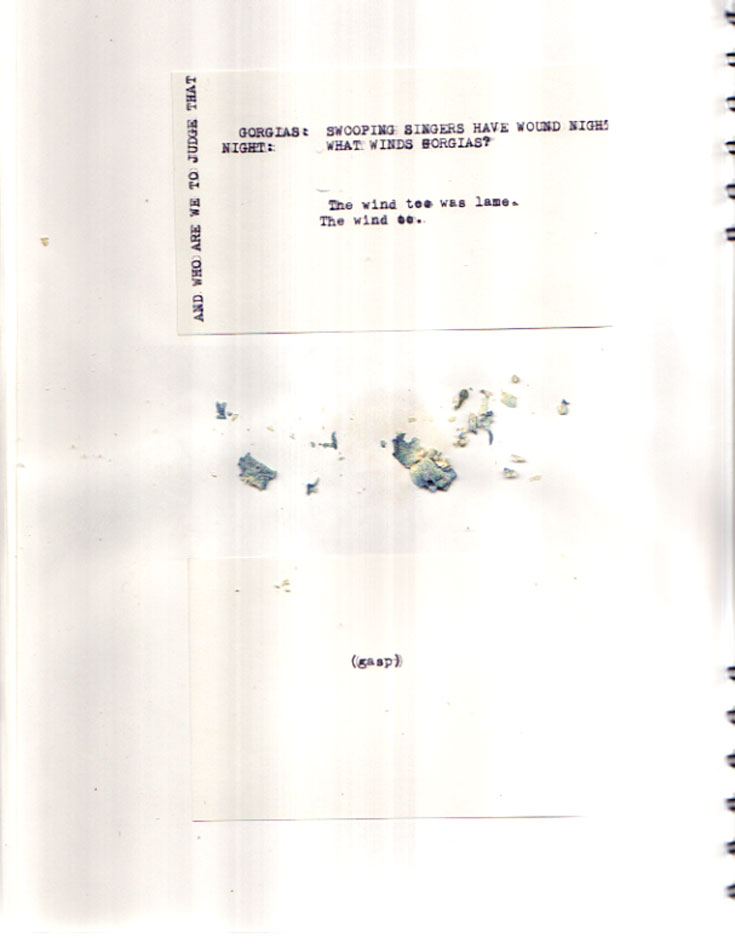
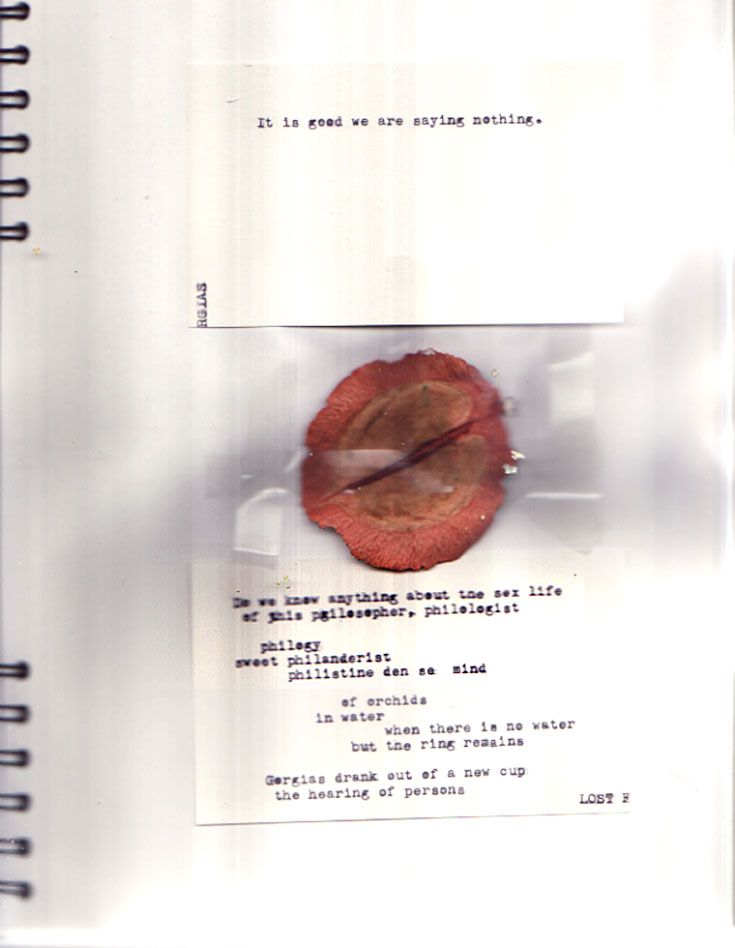
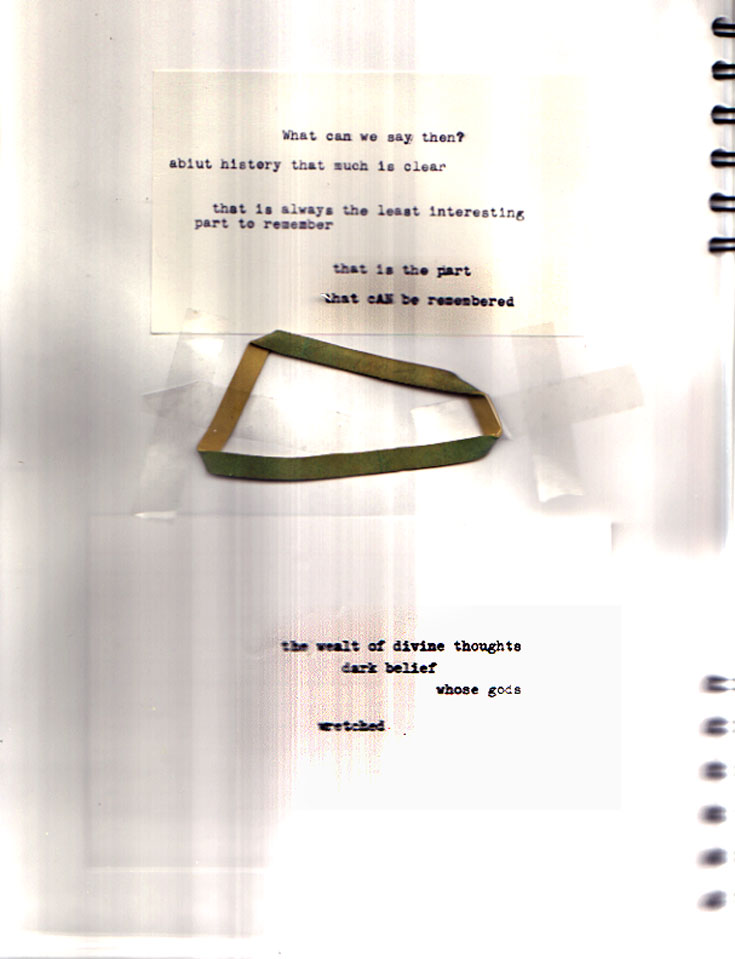
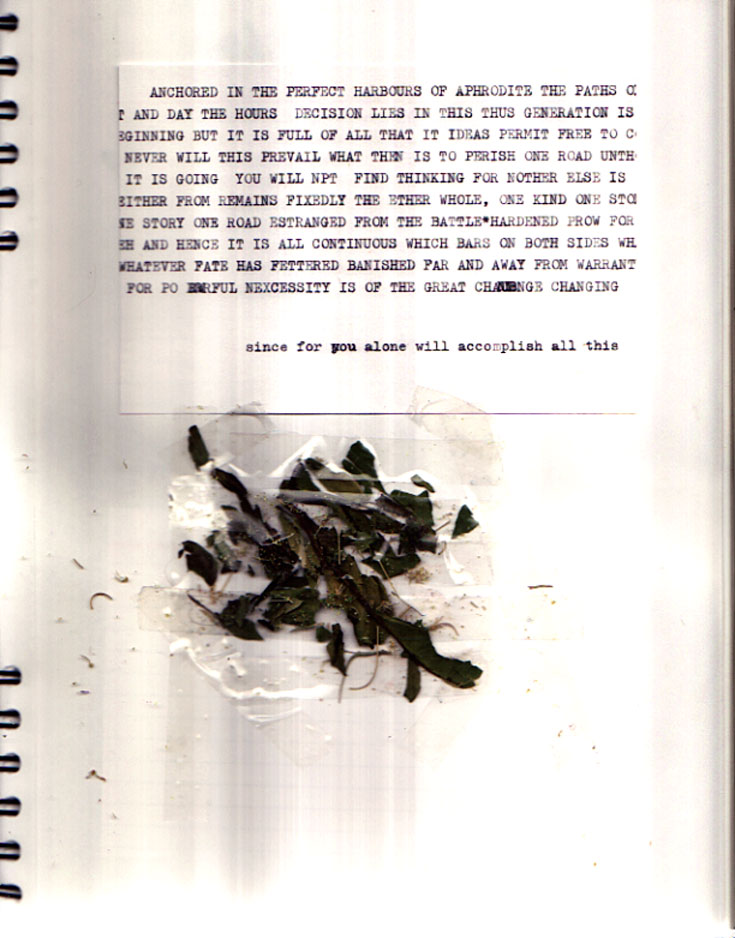
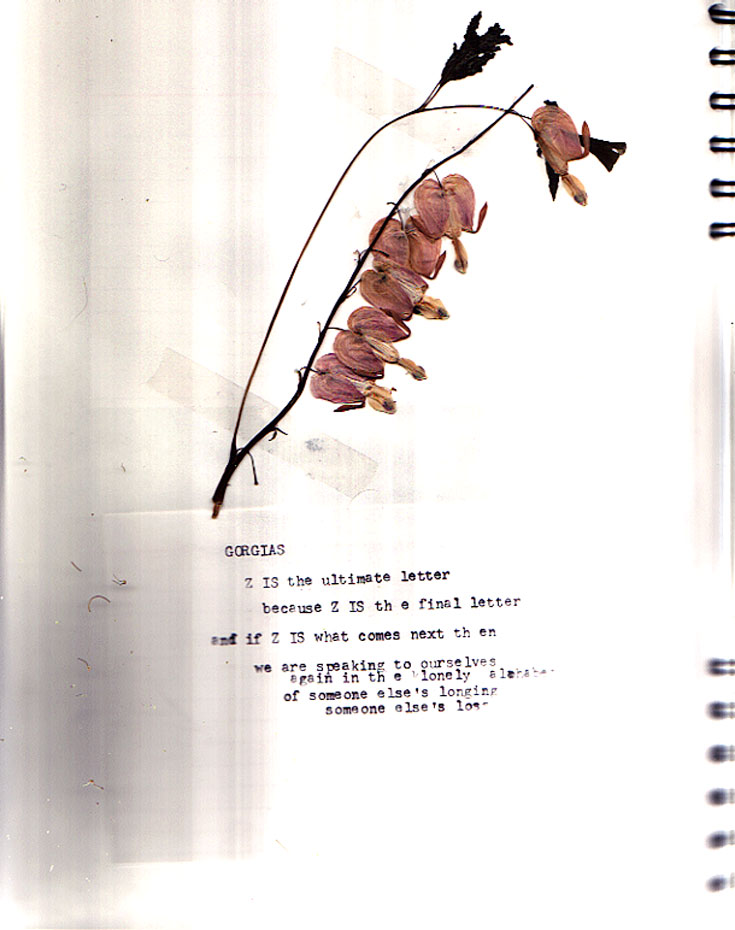
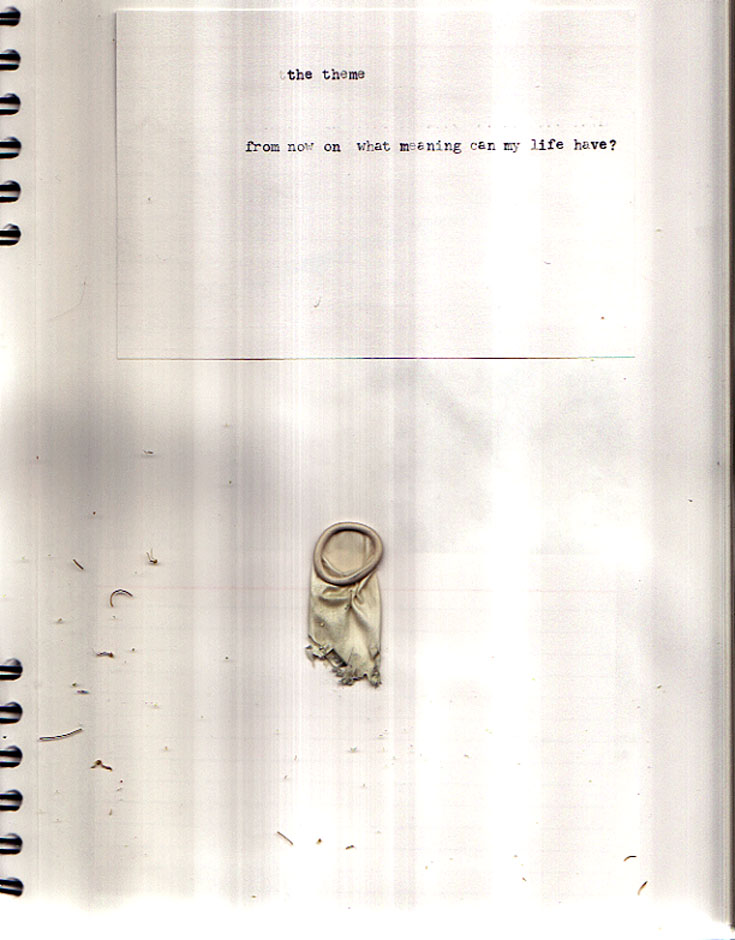
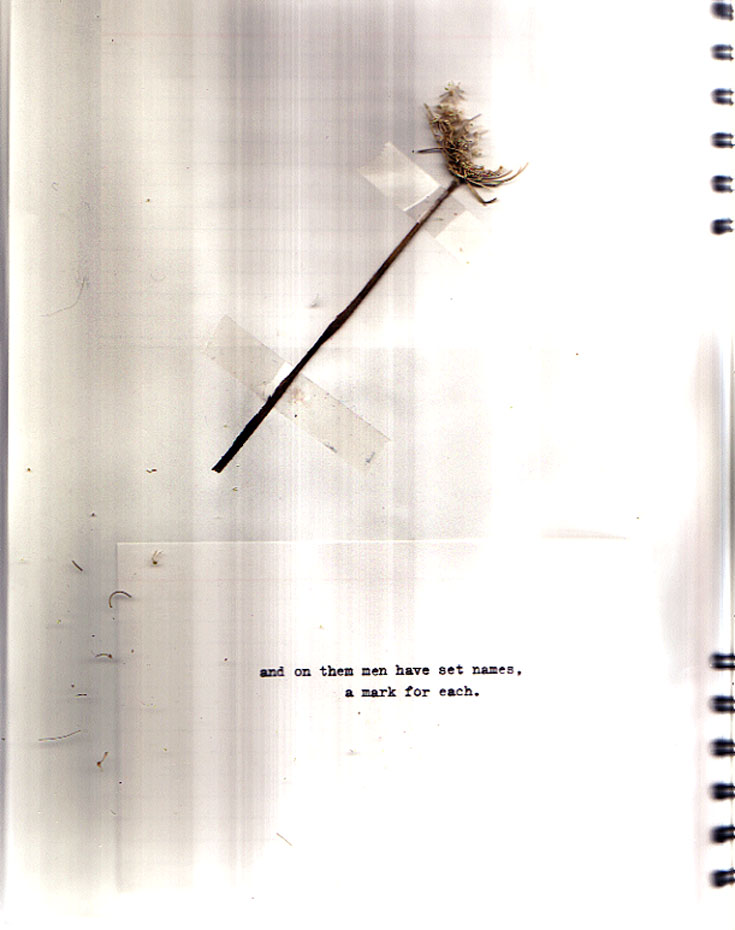
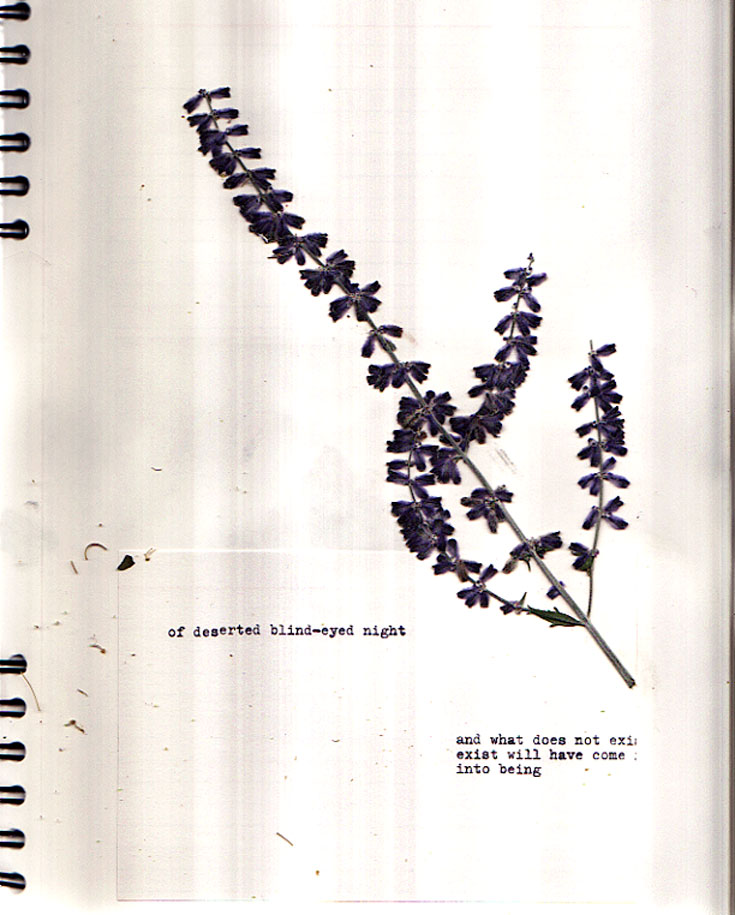
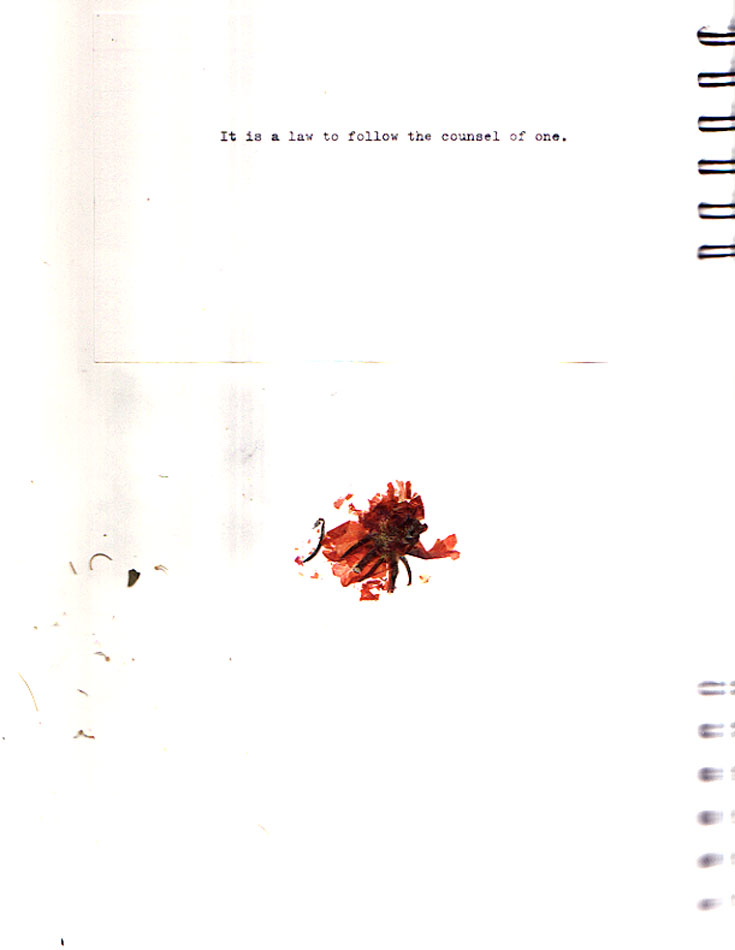
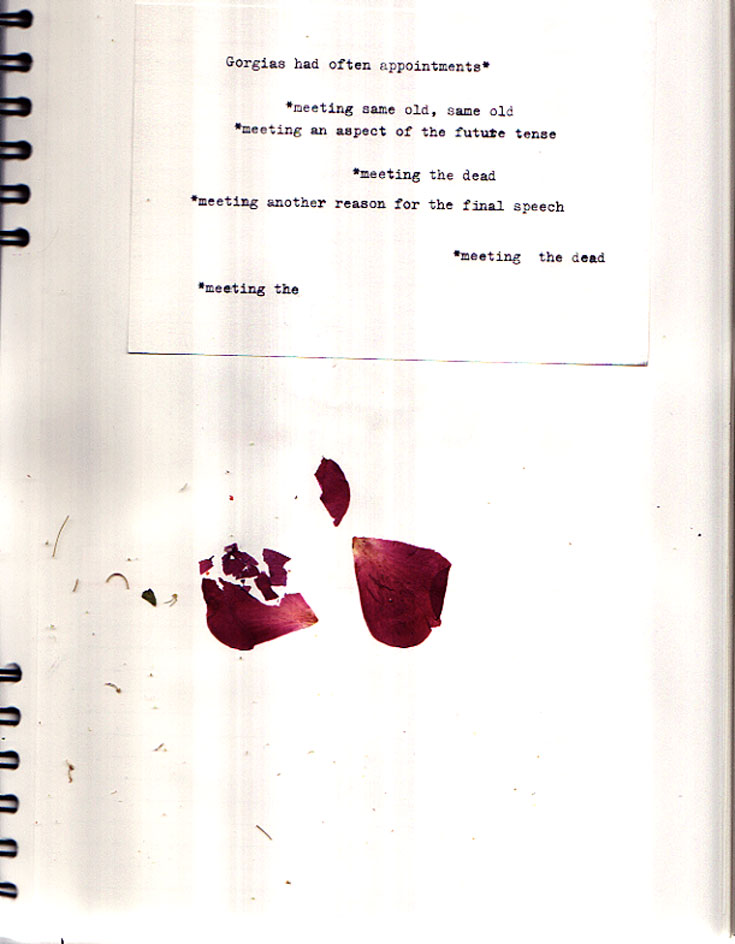
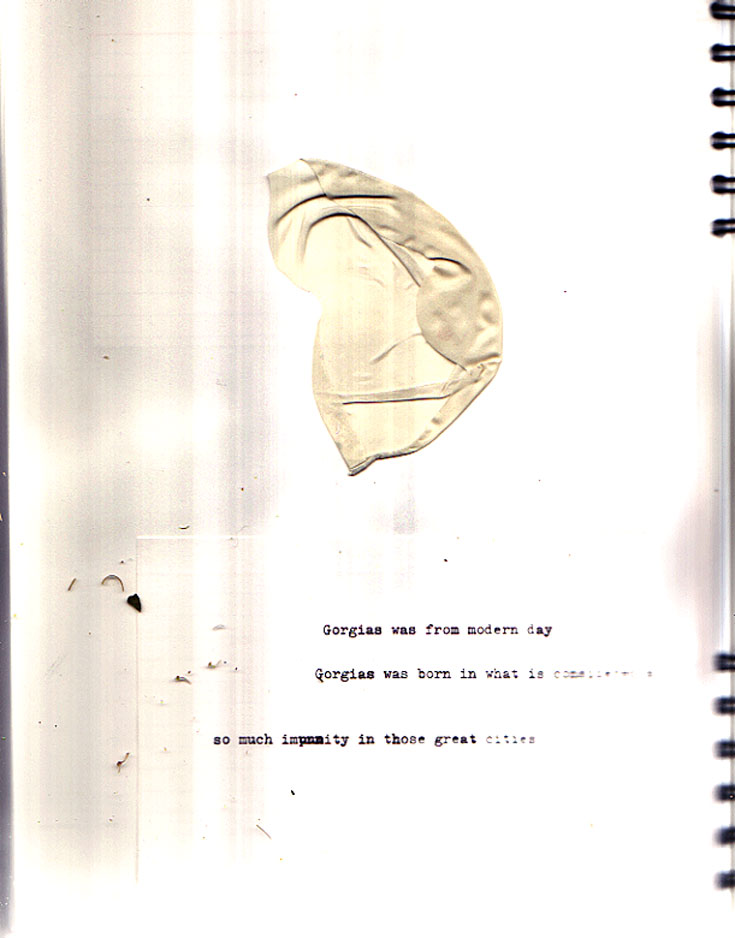
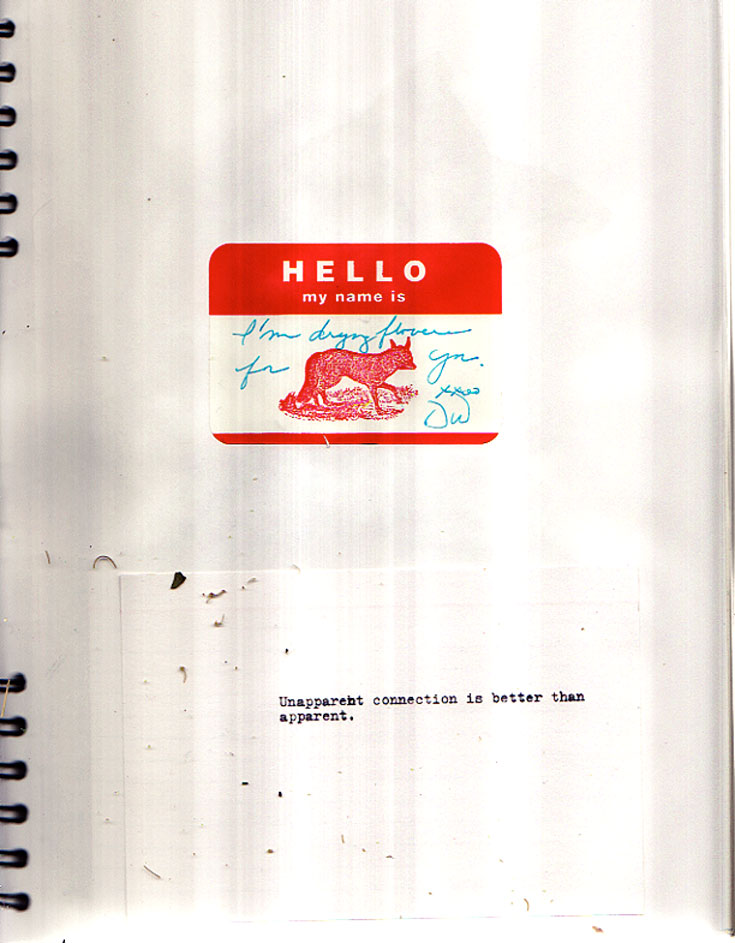
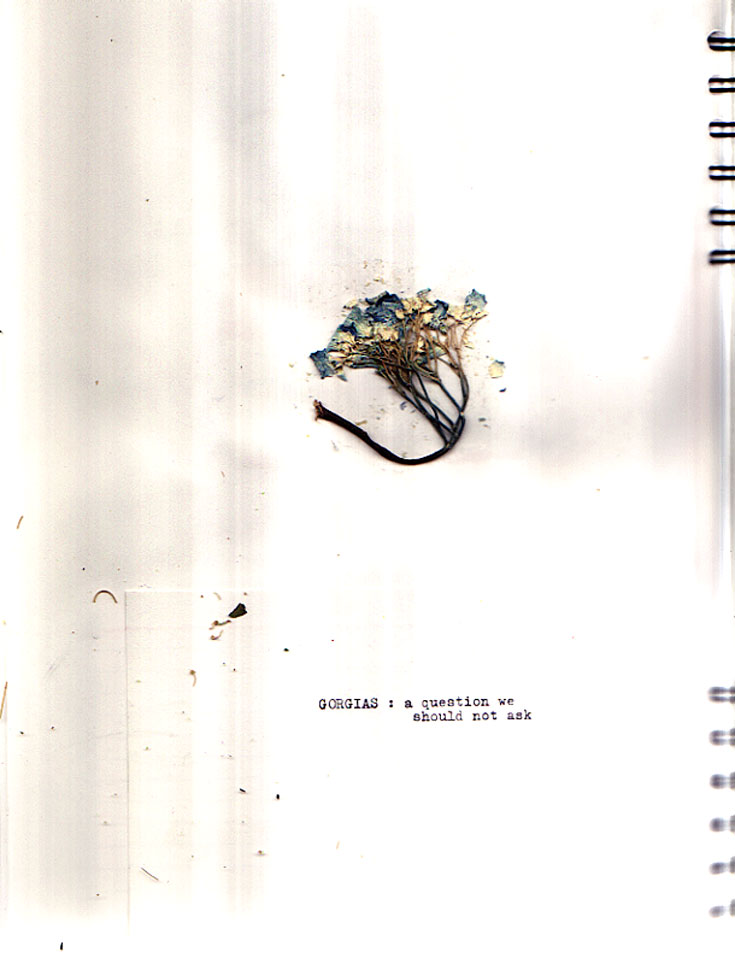
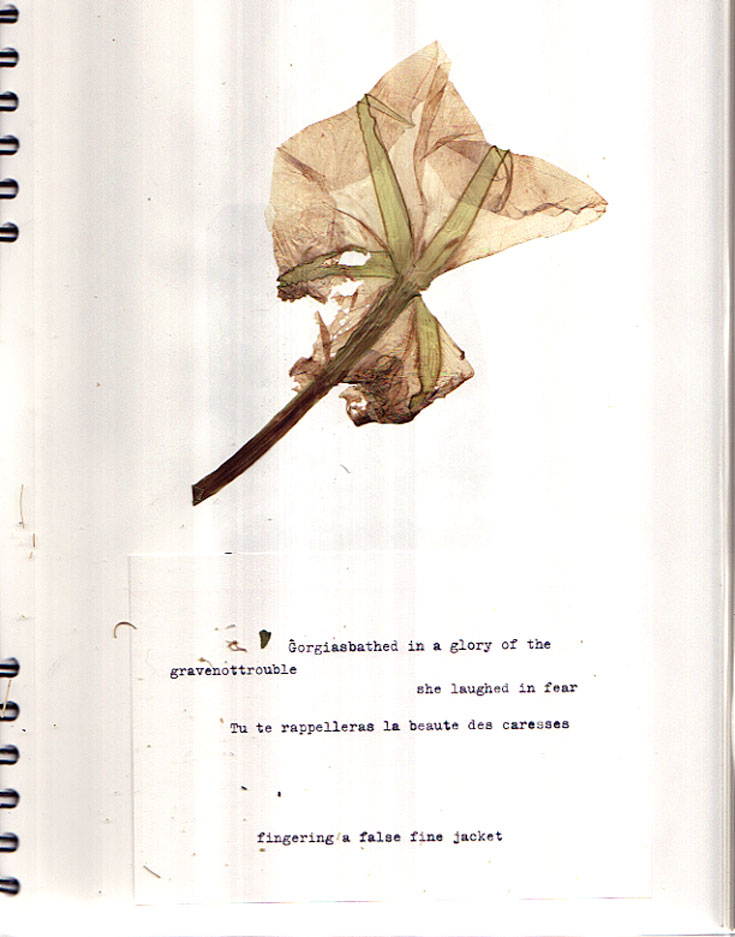
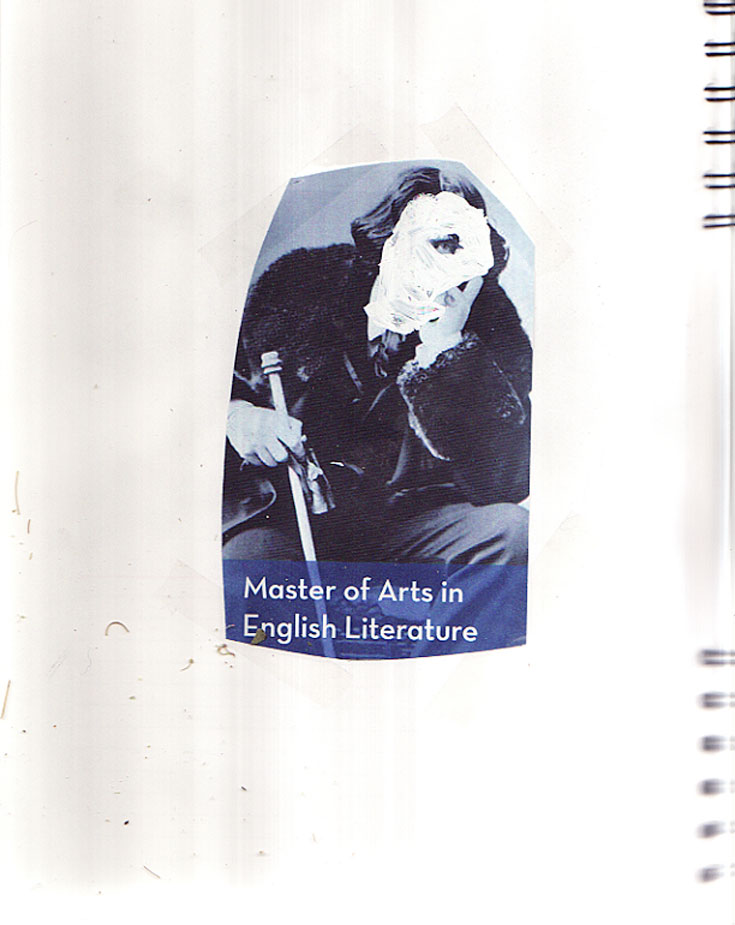
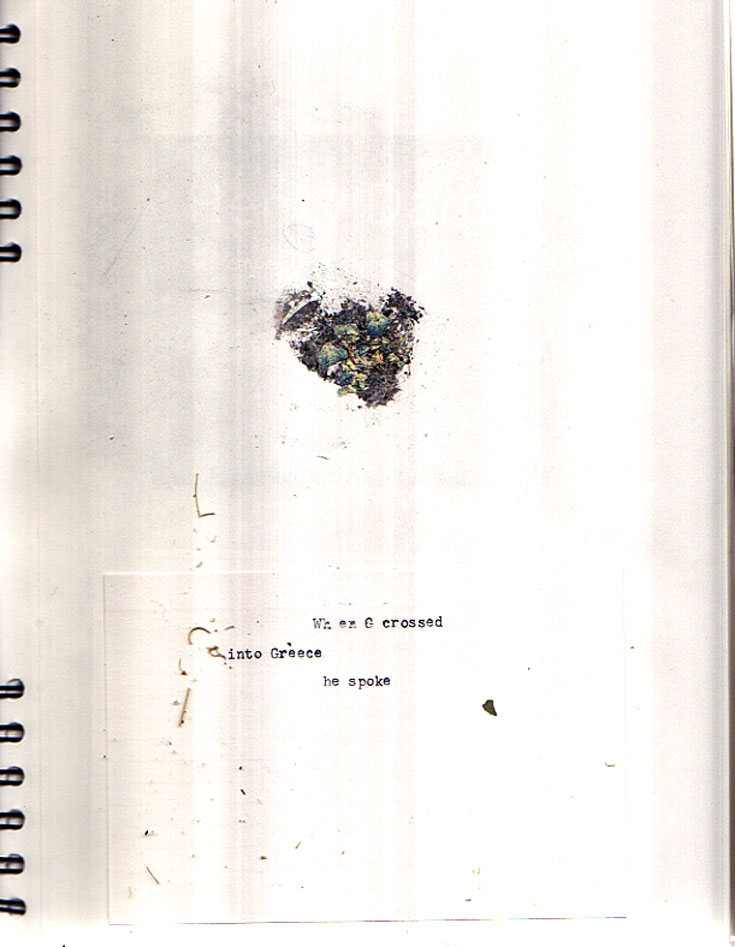
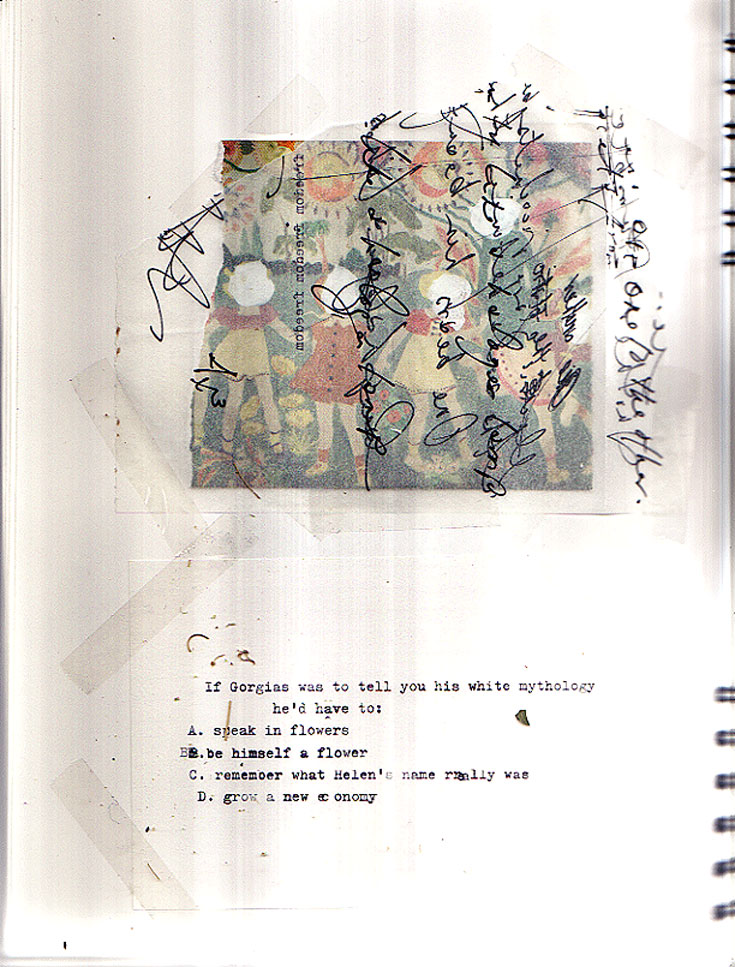
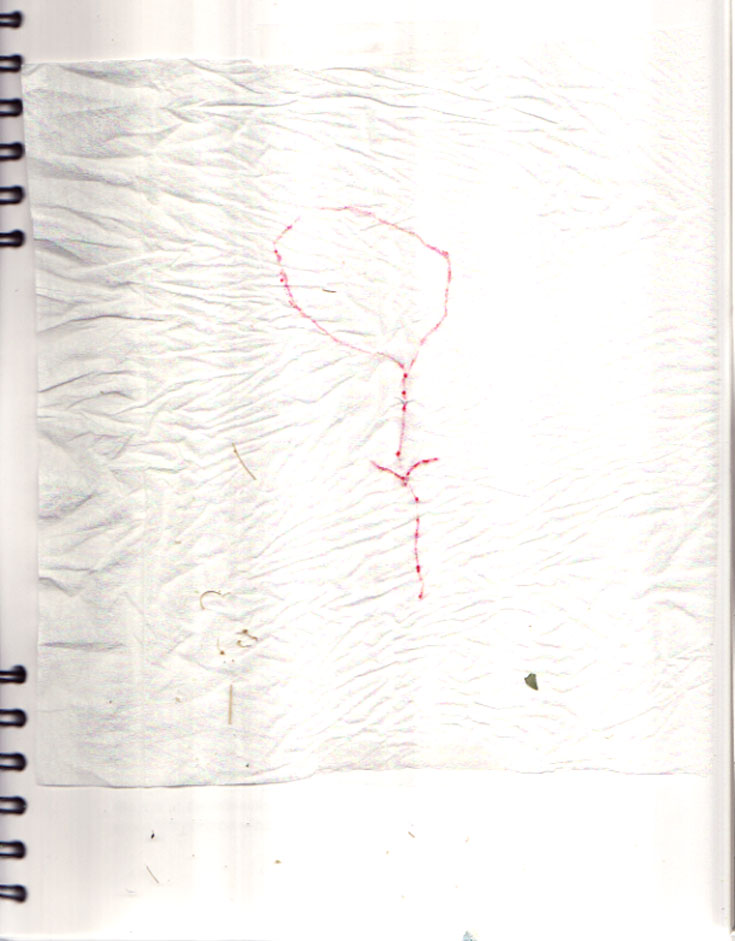
Song: Mullholland by Stars of the LidIn part 3, "The Economy of Helen," the fragments of flowers and text twine together. The piece includes textual bits of phrases and lines from PreSocratic philosophers as well as a visual homage to Emily Dickinson's herbarium. It also marks the entrance of Gorgias as a character—both historically and symbolically—into the working of the entire 'poellage' (part poem, part collage). Materials in this section have been taken from the streets of New York City, the gardens of Amherst, as well as from elsewhere (c.f. balloon-parts from a recent book party). Maurice Blanchot wrote: "The fragmentary: writing belongs to the fragmentary when all has been said." Against this—or rather amidst this situation of remnants—the beauty of construction waits to be spoken.